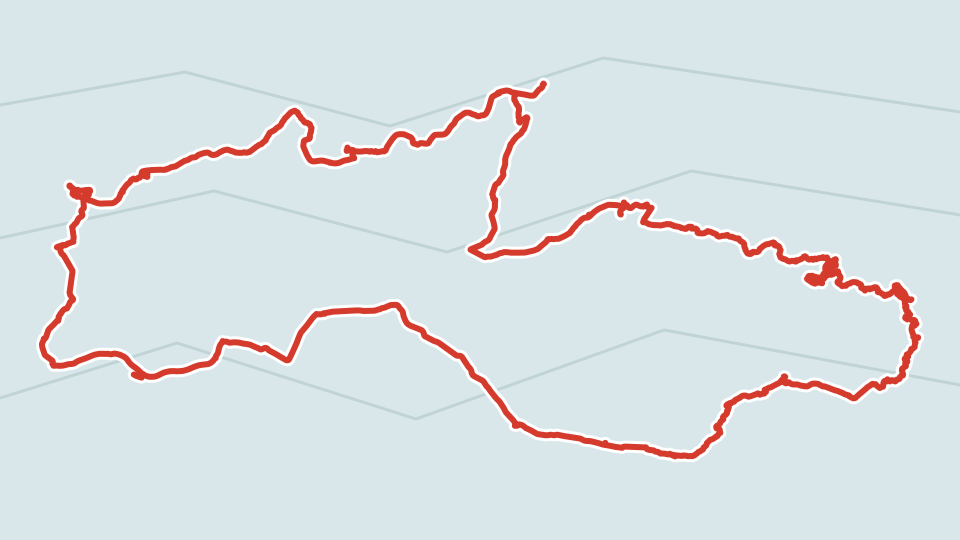
Iceland is a clear and simple country, but that doesn't make it any less interesting or impressive, and maybe even more so.
Both the nature and the people of this island generate and have always generated enormous interest, and for good reason. Hot springs, boiling lakes of mud and lava, multicolored mountains and volcanoes covered in sparse vegetation, omnipresent sheep on their slopes, and small shaggy horses in the fields. The rampant socialism and egalitarianism of a small population of 300,000 people, universal equality and prosperity, the absence of crime, criminals, and prisons, the clear, bright eyes and mind of any random person. The constant cold of 14-16 degrees in the summer, drizzling or pouring rains, storms, and hurricanes. An Old Norse language with an archaic alphabet that hasn't changed in 1000 years, thriving and carefully cherished, yet anyone under 60 speaks perfect English. Practically every second resident of Iceland writes prose, poetry, or is in a band.
A ton of geothermal and hydroelectric power plants providing cheap electricity, but building new ones is hindered by the public, which is overly concerned with preserving untouched Icelandic nature. At the same time, this very same public is perfectly fine supporting such a barbaric activity as commercial whaling — besides Icelanders, only another equally peculiar country, Japan, does this. Importing whale meat into the US and EU, by the way, is a criminal offense, even though it's sold at Keflavik airport.
Iceland has the oldest functioning parliament in Europe — the Althing. How long it will continue to exist is hard to say: almost 90% of people vote in elections; with such turnout and a small number of voters, a transition to direct democracy is entirely possible, where people directly analyze and vote on laws.
Iceland has no army, only a coast guard, so NATO is responsible for the country's defense. It's the only NATO country without armed forces. For a long time, there was an American military base on the island, but in 2006 it was shut down for good.
Every year, Iceland hosts a huge gay pride parade, the last time with 100,000 participants — out of a total population, let me remind you, of 300,000. The mayor of Reykjavik, a comedian by profession, took part in the parade dressed in women's clothing. His party won the parliamentary elections with the slogans: "Give us free towels in swimming pools" and "give us a polar bear for the zoo". Furthermore, Iceland is the first country in the world to have an openly gay prime minister, her name is Johanna Sigurdardottir.
As for names, surnames have been legally banned since 1925, unless a parent is a foreigner: a traditional Icelandic name consists of the first name itself, and a patronymic/matronymic, that is, a "patronymic" from the mother. Thus, the singer Bjork, whom you surely know, is named Bjork Gudmundsdottir, and the cellist who frequently visits Latvia is Hildur Gudnadottir, meaning the daughters of Gudmund and Gudna respectively.
Iceland has a state monopoly on alcohol, and you can only buy it in 48 special stores across the whole country. Only 15% smoke, and periodically there are talks about banning nicotine altogether, and dispensing it in pharmacies by prescription to those who can't do without. The state's fight against other drugs is very intense, except maybe marijuana, but even that is only smoked in the capital. It's not hard to see why Icelanders all look very sober and healthy, calm and joyful. Everywhere, in parks and on the sides of the roads, hallucinogenic mushrooms of the Psilocybe family grow, but nobody picks or eats them.
Already in Reykjavik, at the campsite, I downloaded one of the famous books by the Icelander Halldor Laxness, a Nobel laureate, called "Independent People". You can find a lot in it that resonates with our journey, so I'll be dropping relevant quotes.
These people didn't feel like slaves and stood out from the general mass of the poor. They relied only on themselves, and their greatest capital was their independence. They believed in their own strength, highly valued enterprise, and, when slightly drunk, would recite ancient sagas and poems by heart. They possessed an iron will, and no obstacles could scare them. But no one would call them soulless materialists who care only for their daily bread. They knew by heart many ancient poems with intricate rhymes and alliterations, and some even composed poems themselves — about friends, about their hard life, about danger, about nature, about hopes for brighter days — those hopes that come true only in the kingdom of heaven, and even about love (poems about love were considered indecent).